
March 2026 Newsletter
https://www.cyclewellington.org.nz/march_2026_newsletter
Kia ora koutou -
At the Council Planning & Finance Committee meeting on March 12, Wellington City Councilors voted to amend Mayor Little’s three year plan to retain climate action funding and continue cycling projects in the short term. This has been thanks to Green Councilors and strong calls from Cycle Wellington supporters. Thanks to everyone who spoke up!
We still face an up-hill battle to ensure the council continues to fund the remaining Bike Network Plan but, for now, the Bunny Street consultation and Brooklyn Road projects should proceed.
An inner-city south-west connection is on hold until 2027, along with the rest of the program. A review of capital projects (mostly transport stuff) is signalled, but for now remaining primary network routes like in Miramar are not cancelled yet.
This gives us a better chance that we can see them proceed in the future. The proposal going into the meeting meant we faced an indefinite pause on everything! Special thanks to Kasey McDonnell (Welly Climate Nerd) and others for helping to get this urgent situation out to people.
Alex Dyer and Linda Beatson
Co-Chairs Cycle Wellington
Calls to action
Submit on NZTA lane rule changes
Closes 5pm today Wednesday 25 March
TL:DR answer “YES” to each proposal. For more detailed pointers; read what CAN thinks, then give your feedback before 5pm this Wednesday!
Demand the Mayor and your councilors accelerate the bike network rollout
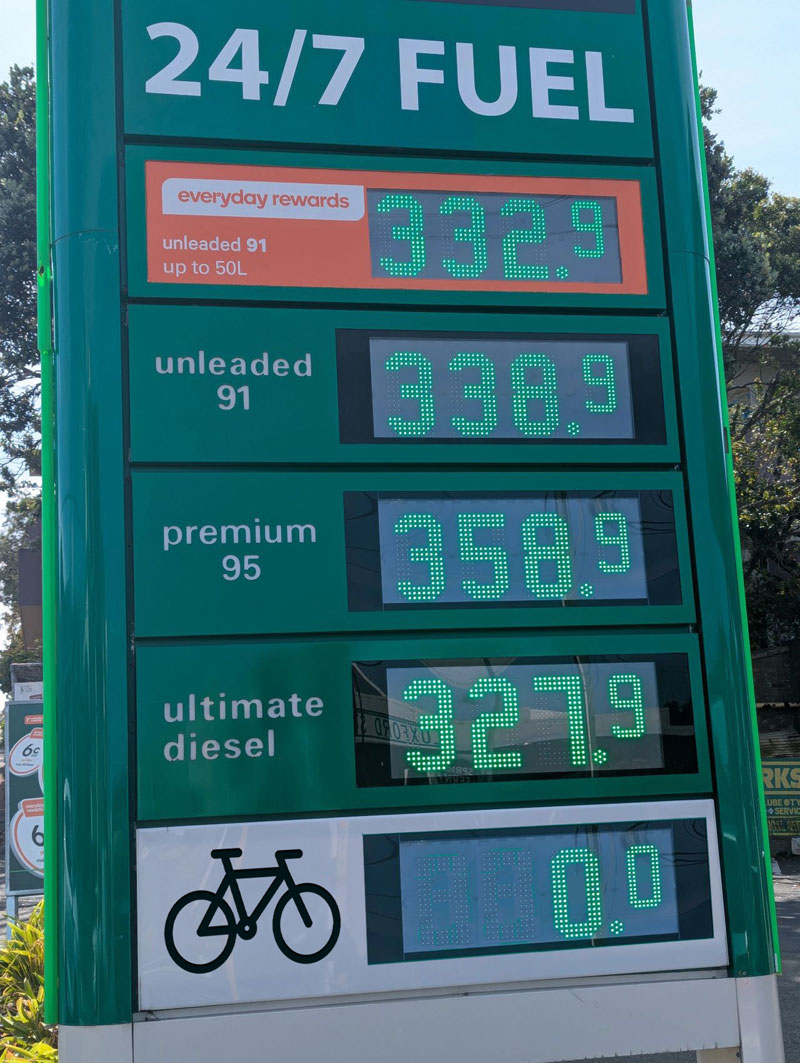
Funding for the remaining bike network is still under serious threat as it facing a ‘capital projects review’ as part of an effort to limit rates rises. This is unacceptable as the cycling budget is not a nice-to-have to be axed to soften the consequences of long term underinvestment in other important infrastructure.
There are still significant primary routes remaining to be done for Paneke Poneke such as Te Motu Kairangi and Middleton Road, and, to save money, the secondary network was recently pushed out for completion ten years later than originally planned (to around 2041!)
Rolling out safe cycling facilities is now getting scarily urgent. It would be truly insane to see this council reduce funding for the remainder of the bike network, again. The situation with fuel prices going through the roof has created an urgent need to deliver safe and comprehensive networks for people to get around affordably without cars.
If you feel the same, contact your councillors and contact Mayor Little, and impress how important it is to you that they do what they can to accelerate building the remaining bike network with urgency. If things stay really bad with imported fuel costs, the bike network might be needed in place within months, not decades. What is clear, however things pan out, is that we need the full network in place much sooner than later. And we’re going to need a safe cycling network permanently, not just until petrol falls below $3 per litre again (if it ever does).
Not all of this terrible situation is due to our council. Another thing you could do is write to Minister Bishop and call on him to urgently reverse the disastrous Land Transport Rule: Setting of Speed Limits 2024 that his predecessor, Simeon Brown, enacted. The higher speeds, and other rules, are preventing local road controlling authorities from bringing local street speed limits down to 30 kmph. We have fewer tools for making Wellington streets more comfortable to cycle sooner.
Upcoming bikeness
Aotearoa Healthy Shift Webinar - Giulio Mattioli
9am Friday 17 March
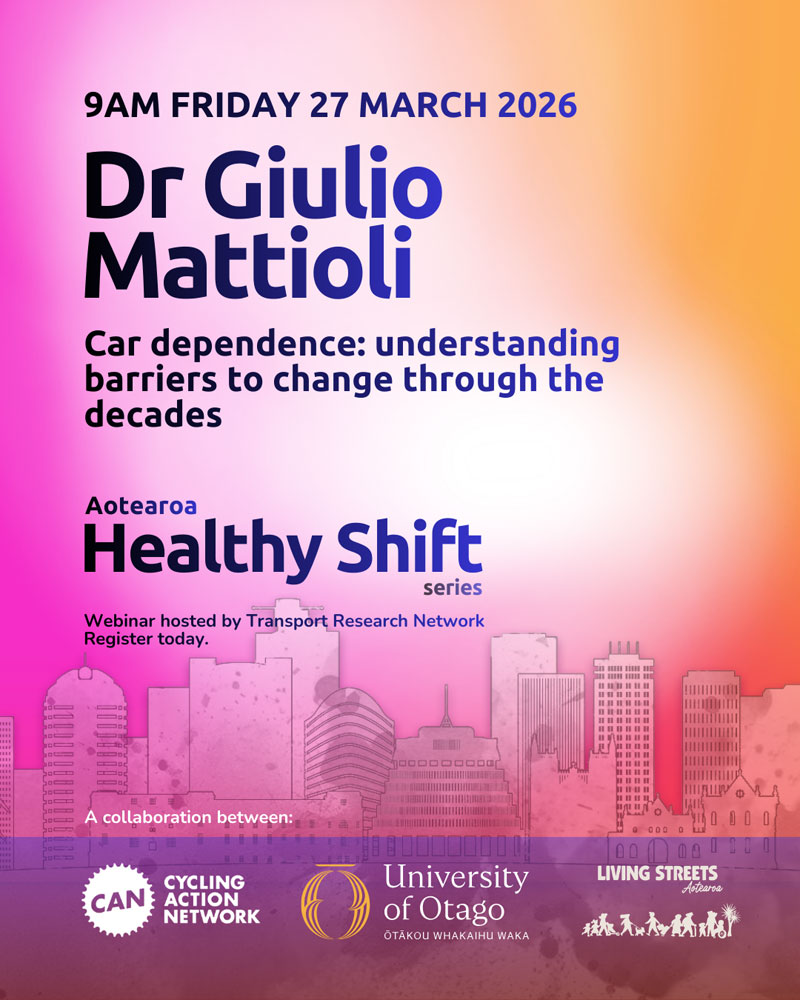
Register on zoom to join a webinar with Giulio Mattioli, an expert on the political economy of car dependence and the barriers to change that many countries face trying to keep this affliction under control. This is the first of a series of webinars being organised by Otago University, Cycling Action Network, and Living Streets Aotearoa.
The Bunny Hop - Team Checkpoint Challenge
11am Saturday 4 April
Wheelworks, 21 Willis Street
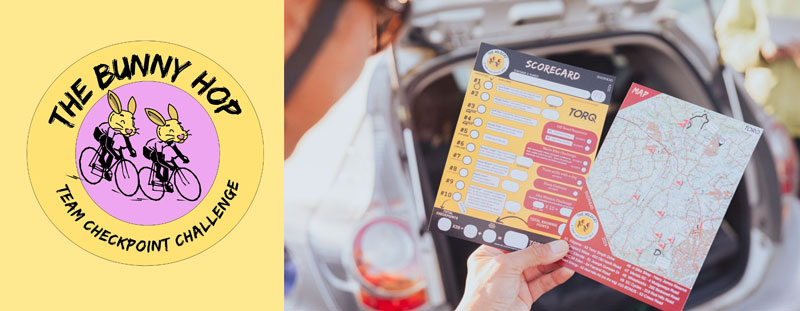
The Bunny Hop is a fun-filled Easter cycling event coming to Wellington on Saturday 4 April. Teams of two have three hours to ride around the city earning points at checkpoints and by completing wacky challenges. All bikes are welcome, and costumes earn an easy 50 points!
The Bunny Hop finishes back where it started - for coffee, treats, and prizegiving.
Register here to help raise funds for Wellington City Mission.
The Big Bike Film Night
Wednesday 25th March 6:30pm
Wednesday 1st April 6:30pm
Thursday 7th May 6:15pm
Penthouse Cinema, Brooklyn
The 2026 treasure chest of films at The Big Bike Film Night includes:
- a dazzling mountain bike ride exploring the breathtaking landscapes of Norway, embracing the magic of the midnight sun
- a life-changing experience for two adventurous women as they embark to cycle to all the ski-fields in New Zealand in one gigantic attempt
- an inspiring film that captures the wettest, most miserable riding conditions imaginable
- a film that playfully delves into the world of those taking cycling to new heights - celebrating fun, silliness, and creativity that comes with pushing boundaries on two wheels
- a compelling story about perseverance, showcasing the challenges and triumphs of navigating daily life following a life-altering injury, and how adaptive design has transformed and enriched the journey forward
- a moving movie that follows a father and son’s journey as they take on one of life’s most meaningful milestones- riding a bike together as a family
- a bold and uplifting story of an adventure activist, attempting to break the 24-hour Guinness World Record in downhill mountain biking- all to raise funds for reforesting foothills around Queenstown, New Zealand. Her relentless pursuit not only pushes the limits of endurance but also becomes a powerful symbol of resilience and environmental commitment
- and crowning the night off… we all love an underdog tale. This charming, funny, heartfelt film inspires us to believe that we all have the capacity to be unlikely heroes in our own stories. The audience is transported back to the nostalgic 1990s, to the slopes of the punishing Mont Ventoux, in Southern France, to witness the drama of a battle between two giants.
Selling fast - book here.
Welly on Wheels Guided Ride
5.30pm Thursday 16 April
SwitchedOn Bikes, Wellington Waterfront
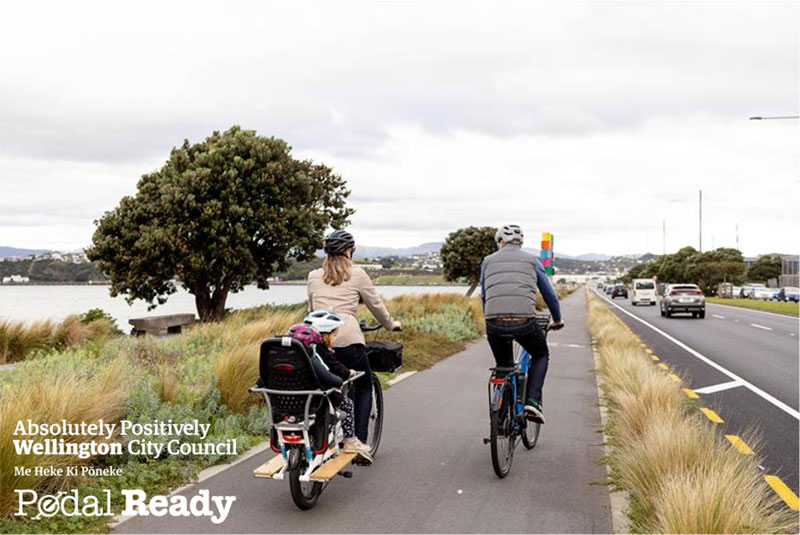
Ride to Kilbirnie and back through Newtown to the city, organised by Wellington City Council and led by Pedal Ready. Each ride starts and ends at Switched On Bikes on the waterfront near Waitangi Park. Book here!
Next Cycle Wellington Meeting
6pm Tuesday 7 April 2026
Sustainability Trust, 2 Forresters Lane, and online.
Recent goings on
At the Trafinz 2026 Conference
Co-Chair Alex Dyer attended the recent transport industry conference here in Pōneke at Tākina.
While there was no 2 Walk and Cycle event this year (usually held biannually), the Trafinz Conference wasn’t all about the RoNS or how to build wider roads for cars and trucks. There were a number of key notes and other presenters flying the flag for active and public transport which was encouraging. The theme of the 3 day conference was “Working with what we have: Resilience for the future.”
Prof. Shanti Ameratunga of Auckland University gave a talk early on about the connection between transport and public health.
Geoff Cooper from the Infrastructure Commission spoke clearly about the need to do more with what we already have, and being far more responsible towards maintaining existing assets. He also spoke about the various potential changes to charging driving as the make up of the transport sector (too slowly) moves away from fossil fuels.
Memorable talks in breakout sessions:
- Stuart Donovan on the challenges of travel demand forecasting
- Julia McMaster on the changes to data gathering of transport behaviour in Pōneke
- Angus Bargh on how better data can help communication between different projects affecting the same physical location.
- Simon Kingham on equitable mobility access and imagining what more we might achieve by expanding the cost recovery from signalled eRUC (Electronic Road User Charges).
- Alice Miller on her research into the unbalanced influence of commercial lobbying affecting the shape of transport investment and prioritisation by our politicians.
Day two saw keynotes from Lauren Streifer of the PTAANZ, and George Weeks, who both made impactful presentations confronting our car dependency and calling for better public transport, walking and cycling.
Barry Fryer gave an update on the new Tūhono trains that are coming to improve journeys between Wellington and Palmerston North and Masterton.
An excellent workshop on Dutch protected roundabout design was led by Lennart Nout of Mobycon Pacific.
Amir Kayal spoke on the need to move to a standards-based maintenance and development methodology (like in The Netherlands). Here in Aotearoa we don’t technically adhere to a set of standards; instead treating transport engineering quality via a guidelines approach (based on Austroads).
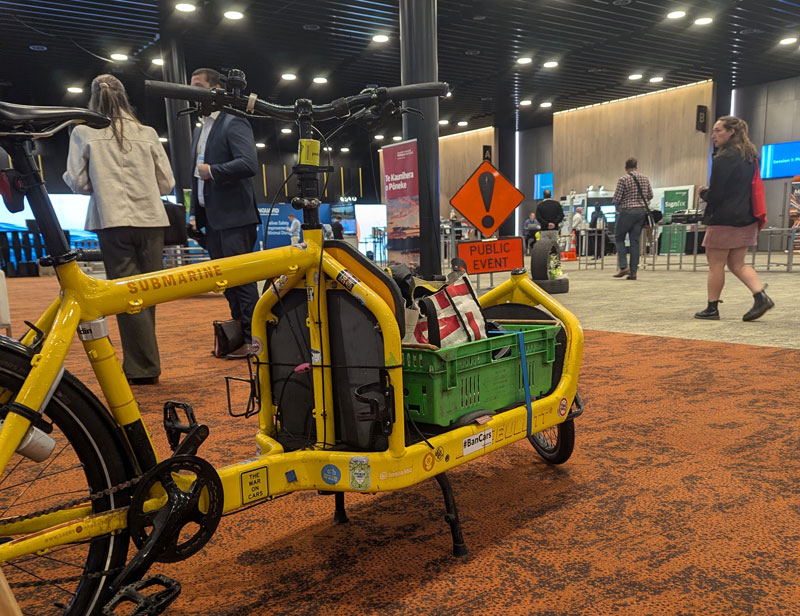
There were many other talks, group rides, workshops and speakers that Alex couldn’t make it along to. With a range of transport-themed decorations in the general meeting and catering area, a cargobike was curiously missing, so Alex brought his up in the service elevator to complement the ‘Resilience’ theme.
Even though Wellington Mayor, Andrew Little, shared at the conference opening that he thought the roll-out of the bike network could’ve been done better, the following evening the Pāneke Pōneke bike network project (so far!) won the 2026 Trafinz Sustainable Transport Leadership Award at Conference Dinner… go figure!
It was encouraging to hear that the escalating fuel crisis was discussed with all attendees at the ending of the conference. We hope that the transportation experts (also known as “a congestion of traffic engineers” apparently) that were at this conference are working on useful plans to help shift mobility in order to meet the challenges we’re all facing right now.
CANDo 2026 Conference and Urban Nerds (Auckland)
Co-Chair Linda’s report:
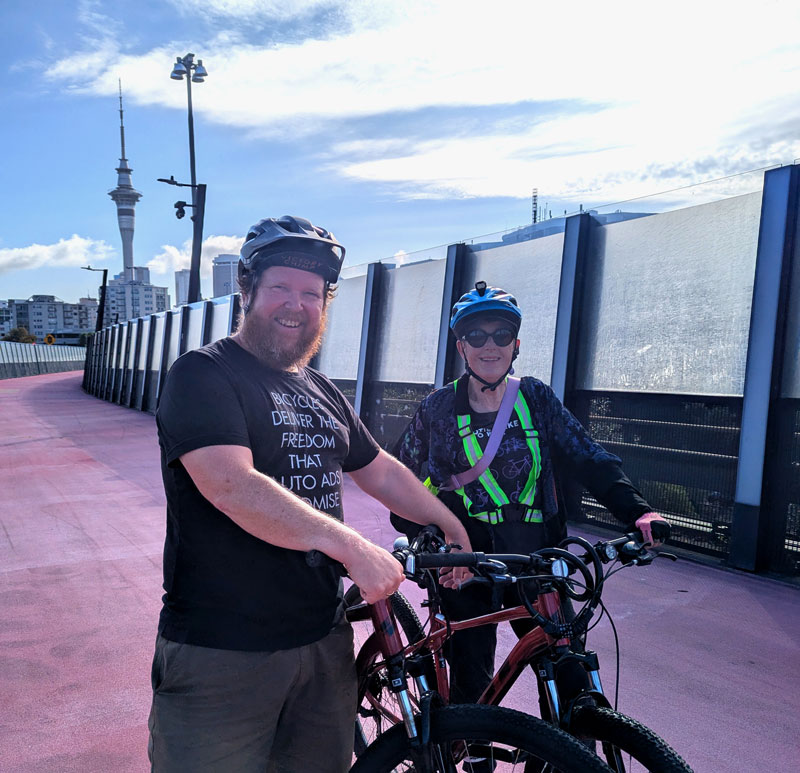
Urban Nerds was held at Good George Brewing in Wynyard Quarter, on a very hot and sunny Auckland Day. It was a chance to convene ahead of the conference, and meet nerds who were not attending the conference.
Saturday morning started with 2 group rides - a challenging 30km ride to the west of the city including some proper climbing, and a shorter, less hilly 19km ride to the east.
Alex and I were on the shorter, less hilly ride on a loop of Franklin Road, past Victoria Park, up Nelson Street, the famous pink path, Ian McKinnon Drive (why is there a street named after a Wellington local body politician?), through Kingsland to Carrington Hospital, along Pt. Chevalier Rd, back down Meola Road, Coxs Bay Grey Lynn park and back to Covert Theatre in Ponsonby.
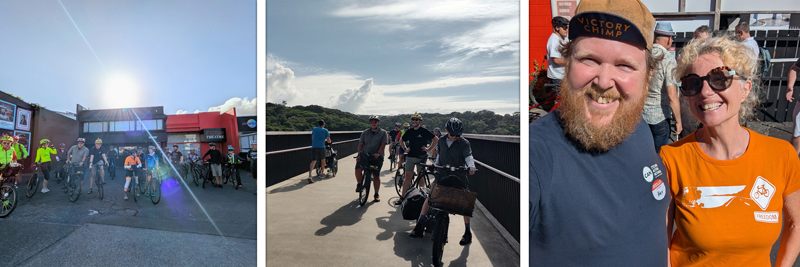
We saw a variety of infrastructure, bike priority crossings, shared paths, dedicated 1 and 2 way cycleways. One of the most interesting features was on Meola Road, where the path was put in without moving the kerb, using some simple engineering (we would like Wellington to start using this method).
Christine O’Brien started by talking of her experience advocating for active transport while on the Mangere-Otahuhu local board, and the best ways for advocates to get things done - main takeaway was to understand the local system, and to use all parts of it, always show up, and do not go away. Christine has been active in making Mangere the cycling capital of Auckland.
Karen Hormann and Donna Wynd from Bike Auckland gave a rundown on successes to date in Auckland. The main point was that there is now a connected loop around the central city, the love has not been shared in the west, south and east to the same degree.
Saturday’s final session was breakout groups to discuss how we can share resources and help each other to advocate for better streets before we went to a local bar and then to dinner.
Lennart Nout started the Sunday morning session, illustrating how road conditions shape behaviour and challenging some commonly-held statements. ‘Good bike networks start with a good car network’. Lennart explained that good design funnels vehicle traffic to where you want it to go - narrow lanes, one ways etc, so that cars are not able to go fast in every direction, every time.
He pointed to Ponsonby Road, a very nice street for shopping, eating which has four lanes of traffic, and is therefore not as pleasant as it could be - the unfettered ability to turn left or right at every side road means it is like a main thoroughfare, rather than a high value meeting / mixing / shopping street.
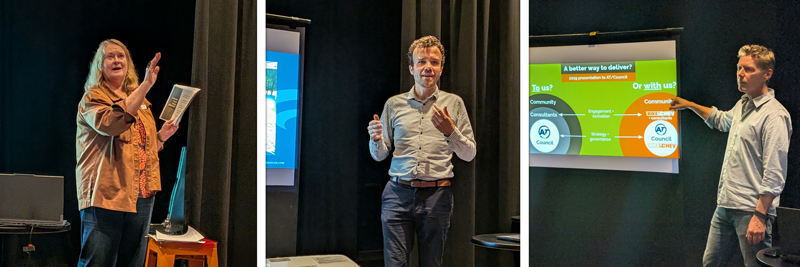
Left to right: Christine O'Brien, Lennart Nout, Matt Fordham
Next up was Richard Hamer from Bike Whakatane. It was interesting to hear how Bike Whakatane has worked with a number of small community groups to run activations, lobby local decision-makers, and model an e- bike hire scheme (Whakatane was chosen for the trial as a small and varied community), including a bike that can take older or less mobile people on seats in the front.
The bike hire scheme has been the impetus for many of the hirers then buying their own e-bikes. A small organisation with a small budget is forced to innovate, and with no money for ‘talent’ Richard and his friends have made their own advertising reels, cheesy and funny, peak Dad-joke level. However, an advantage of being a rural service-centre is that there are plenty of older farmers willing to use their skills and muscle to make pump tracks, fix gates on trails and contribute to building stuff to keep costs down.
Louise Tu’u is an actor and writer and powerhouse of cycling in South Auckland. She spoke of demonstrating that brown women DO ride bikes - ‘here I am, every day, doing it’. In South Auckland the car is a status symbol, and a bike is the exact opposite - she said a bike demonstrates that you have just got out of prison, have 100 demerit points, or are too poor for a vehicle. She works on projects such as ‘Brown Womxn Who Cycle’, ‘Find my Way’ (a project with children about how they want to get around’, and has utilised funding to pay local young people to run bike valet parking at events, manage bike fixups and giveaways.
She is often seen distributing bike merch and taking the opportunity to distribute voting enrolment forms (apparently that is a harder sell than bike bags and reflectors!). Her main point was that being visible on your bike, going to everyone else’s events, and taking the opportunity to talk to people you don’t know is a valuable way ‘in’.
Stephen Wood from Spokes Canterbury talked about his lifelong biking experience - to school, a long university stint, touring and for local and recreational riding when living in Central Otago. Now retired in Christchurch, he leads rides for the ‘Wednesday riders’, is a very regular submitter and speaker at local board and city council meetings, and more recently the front rider on a tandem, with a sight-impaired person who is keen to go biking, Stephen attended the Trafinz conference in Wellington, and then rode his bike from Wellington to the East Cape, before he took the bus to Auckland.
Matt Fordham, the founder of Crank, told stories of community consultations in his home area of Point Chevalier, and how they sometimes had gone off the path. The theme was ‘change at the speed of trust - the importance of connecting councils and communities’. His initial involvement in bike-buses came from his desire to get his kids safely to school. He talked about opposition to bike lanes in the area from sports clubs wanting street-side parking on Saturdays, and local businesses who were afraid of losing customers.
A campaign called ‘‘Ride your bike to football’ was soon underway, with vouchers given to participants (to spend at the local cafes) which reduced the need for parking, and demonstrated how many bikes were at the games. The point Matt made frequently was that understanding the community is essential to succeeding in advocacy - and that all the community is important.
As an example - the parents might say they need to drive the kids to school, sport etc, but those same kids say that the car is their least favourite way to travel. ‘Kids who live life through the windscreen grow up to be parents who drive their own children everywhere’. Matt showed some sobering statistics about how the numbers of kids walking and cycling to school has dropped from 80% in the 1970s to less than 10% now. There is however, hope, and advocacy has an important role to play in changing the current environment prioritising car transport.
‘Cycling Action Network Update and Strategy’ was the final session, with board members including Chair Alex Dyer presenting on the current shape of CAN, where to from here, how members can contribute, and how we can make best use of scarce resources. Topics included the IT platform, enthusiastically presented by new board member Nathan Kershaw, from Ōtepoti Dunedin, finances, current and future strategy and more.
CANDo 2026 had 25 enthusiastic participants from Auckland, Whangarei, Rotorua, Whakatane, Wellington, Christchurch and Dunedin who left invigorated, encouraged, and informed by the rides, presentations and the opportunity to meet with colleagues from other areas.
Te Ara Tupua and the Eastern Bays path towards Eastbourne are nearing completion
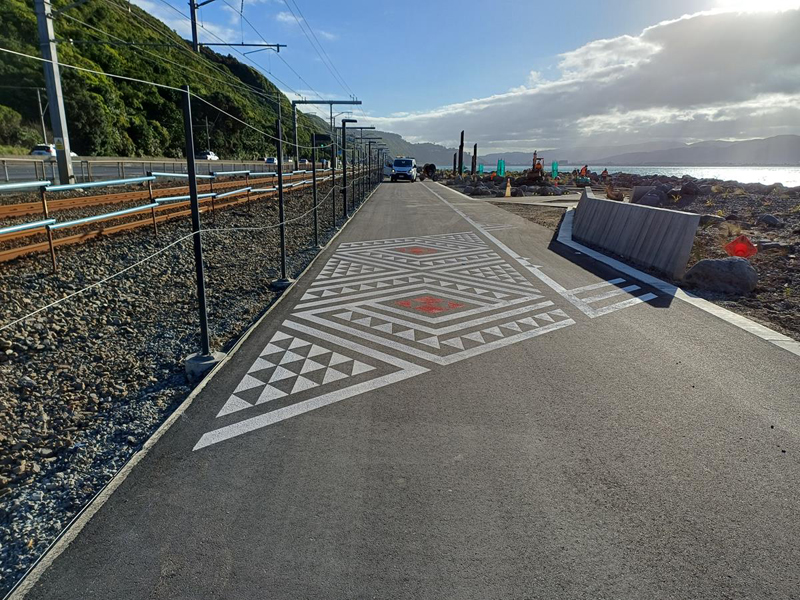
The latest update from NZTA says to subscribe to learn of the opening date first.
Ākau Tangi Evans Bay improvements
The Evans Bay project continues apace, with a concrete footpath now as far as the public boat carpark, past the boat club. This brings a wider path than the temporary lane on the road and more protection than road cones.
WCC Transport projects
The Bunny Street and TSB Arena service lane is happening again, thanks to loud lobbying by Cycle Wellington and Green Councillors. Watch this space for consultation dates.
Do you like this page?